Equipment
Equipment for every stage
Kudret Makine machines for mass preparation, refining, tempering, moulding, enrobing and cooling of chocolate.




Topic · 6 guides
Back to guidesA chocolate line is a chain of five stages, and bar quality is decided by the weakest one, not the most expensive one.
The mass is mixed, refined to 20-30 microns, conched, tempered, moulded or enrobed, and cooled. Each stage sets one property: particle size decides mouthfeel, crystallisation decides gloss and snap, and cooling decides whether that gloss survives to the shelf.
The guides below follow the process flow. If you are still planning a workshop, start with the first section: it covers the minimum set of machines and the order to buy them. If your line already runs and the product blooms or loses gloss, go straight to tempering and cooling.
This is where texture is decided: chocolate left coarser than 30 microns feels sandy, whatever the cocoa cost.
The working window is narrow: dark chocolate is held at about 31-32 °C, and a 1-2 degree error shows up as grey bloom a few weeks later.
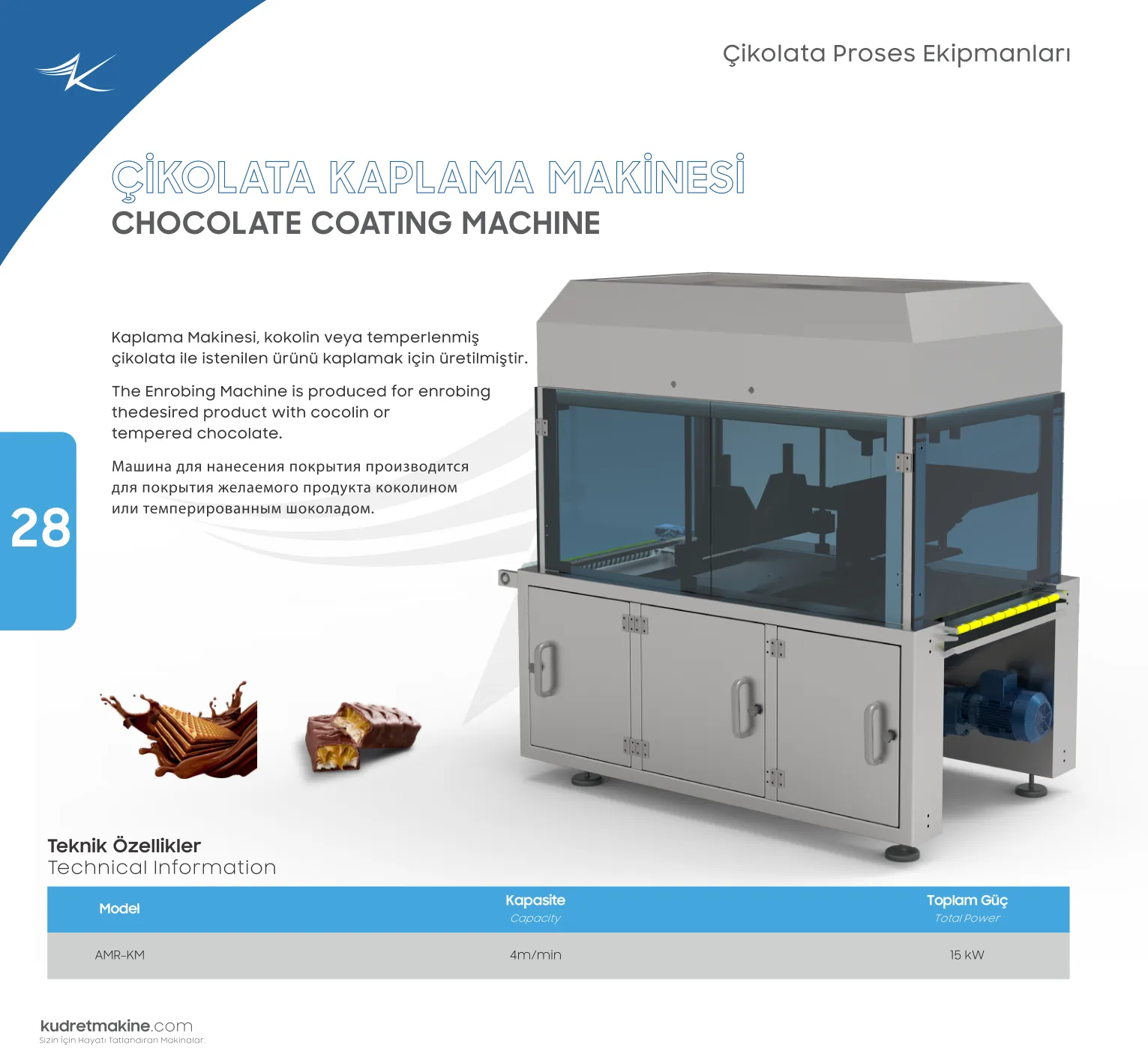
Bars and pralines go into moulds, bars and wafers pass under the chocolate curtain. In both cases one extra gram of chocolate per piece eats the margin.
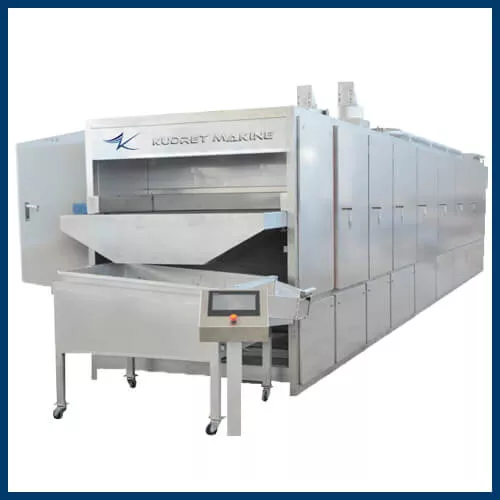
The tunnel should hold around 12-15 °C in the middle and keep the product above the room dew point, otherwise gloss is lost at the exit.
Most losses happen where stages meet. Over-refined mass wastes mill time and energy, poorly tempered product goes back for remelting, and one extra gram of coating at thousands of pieces per hour becomes kilos of chocolate per shift. A cooling tunnel sized too tight limits the whole line, even when the enrober could run faster.
Chocolate gloss is created in the tempering machine and kept or lost in the cooling tunnel.
Equipment
Kudret Makine machines for mass preparation, refining, tempering, moulding, enrobing and cooling of chocolate.
Topics
Topic
Kudret Makine engineers confectionery and food-processing lines to your real production task and ships directly from the manufacturer.
Get a consultation