Equipment
Equipment and planning for your plant
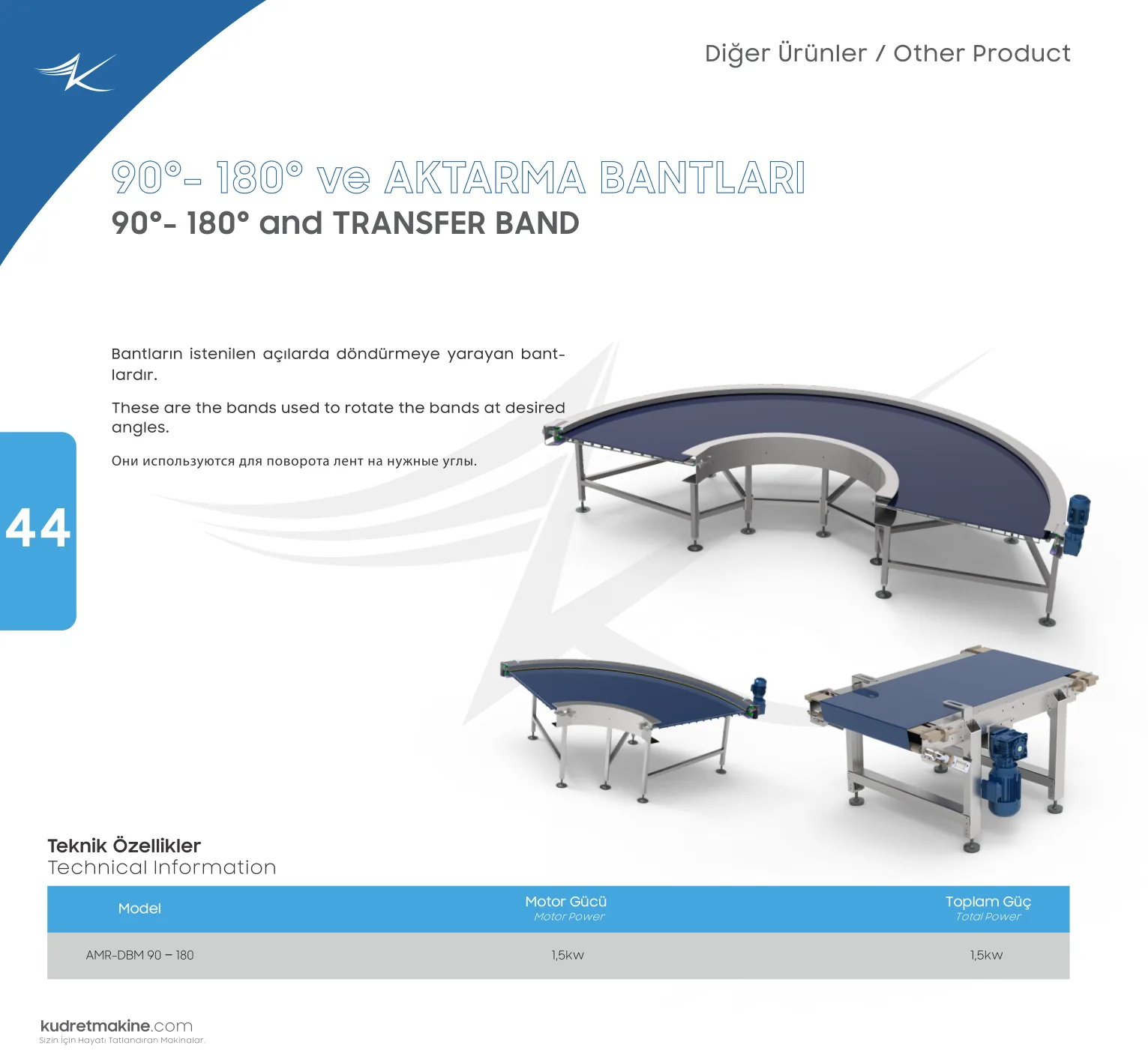
Conveyors and buffer tanks, plus pages on how Kudret Makine plans a line around your floor space and utilities.
Topic · 8 guides
Back to guidesAfter delivery, a line becomes production only when the room, the utilities and the people are as ready for it as the machines.
Chocolate needs 18-20 °C and controlled humidity, the cooking area needs steam and extraction, the cooling tunnel needs chilled water and pneumatics need dry compressed air. If these requirements are not in the plant plan before delivery, commissioning stretches over weeks and the first production goes to waste.
This section covers the whole life of a line: from layout and utilities through installation and automation to daily work: training, cleaning, maintenance and loss reduction.
Flows of raw material, product and waste should not cross, and steam, cooling and air capacity is sized with room for the next expansion.
Weeks pass between unloading and stable output; a PLC with recipe memory shortens changeovers and reduces dependence on one operator’s experience.
The same line gives different results in different hands, so SOPs, cleaning and planned maintenance rank alongside the machines themselves.
In a running plant money leaks quietly: unplanned stops because of a sensor that is not in stock, cleaning that takes half a shift because of an awkward design, and product that every shift makes its own way. None of this is visible in the quotation, but all of it shows in the cost per kilo.
A line that cannot be cleaned, serviced and handed over to a new shift quickly loses capacity every day, even if no machine breaks.
Equipment
Conveyors and buffer tanks, plus pages on how Kudret Makine plans a line around your floor space and utilities.
Topics
Topic
Kudret Makine engineers confectionery and food-processing lines to your real production task and ships directly from the manufacturer.
Get a consultation