Equipment
Cooking, aeration and forming equipment
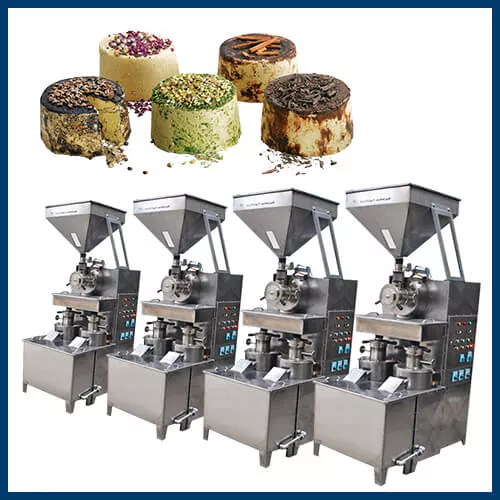
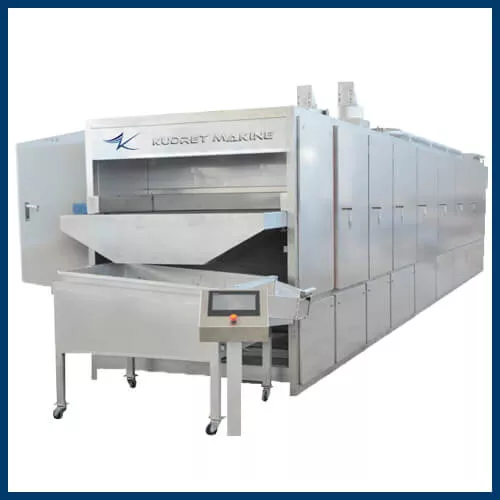
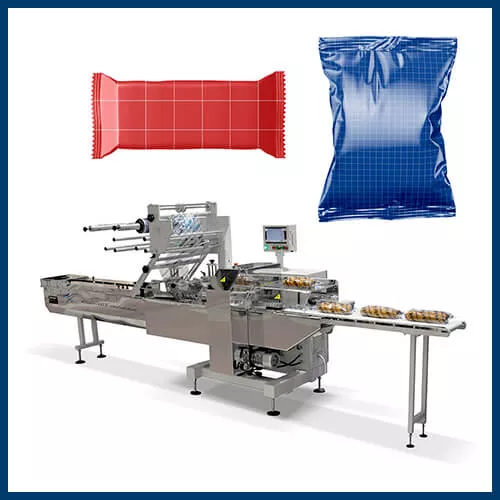
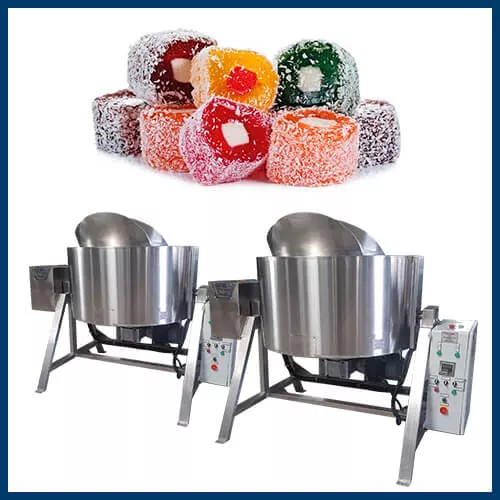
Kudret Makine units for cooking, gelatine mixing, aeration, extrusion and forming of sugar confectionery.



Topic · 7 guides
Back to guidesHard candy, jelly, marshmallow and Turkish delight all start with the same step, cooking a syrup, and differ in how far it is taken and what happens next.
Sugar and glucose cooked to 145-150 °C give a glassy hard candy at 1-3% moisture. The same syrup taken off at 118-125 °C with milk and fat becomes a chewy caramel. With a gelling agent it turns into jelly, and after aeration into marshmallow. That is why two numbers, solids (Brix) and final temperature, control the whole product family.
The sections move from general to specific: cooking fundamentals first, then individual products, and finally depositing accuracy and sugar-free recipes, where the mass behaves differently on the line.
One cooking unit can make different products if you control Brix and temperature, not just time.
Vacuum, the moment the mass is taken off and protection of the finished product from air humidity matter most here.
Jelly is defined by the gelling agent and stoving, marshmallow by its density after aeration, usually 0.3-0.5 g/cm³.
One extra gram per piece at thousands of pieces per hour is a direct margin loss; replacing sugar with polyols changes viscosity and cooking settings.
Money is lost on unstable mass. Undercooked syrup gives sticky product and returns, overcooked syrup gives graining and rejects. Marshmallow density that drifts by 10% changes the weight of every piece and unbalances packaging. Depositing without weight control gives product away every shift.
In sugar confectionery the recipe is written in two numbers, solids and final temperature, and the line has to hold both.
Equipment
Kudret Makine units for cooking, gelatine mixing, aeration, extrusion and forming of sugar confectionery.
Topics
Topic
Kudret Makine engineers confectionery and food-processing lines to your real production task and ships directly from the manufacturer.
Get a consultation