Production equipment
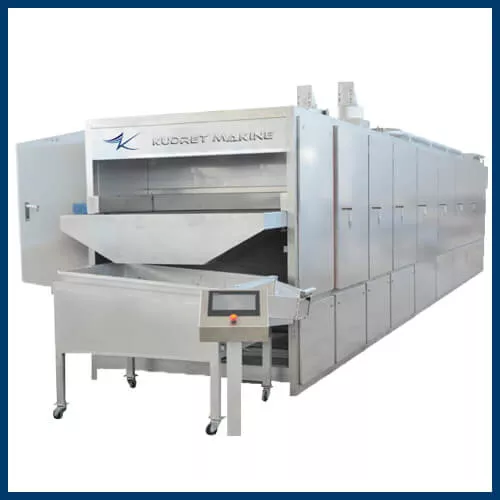
Back to catalogManufacture of tunnel ovens and belt-type roasters with capacities adapted to your production targets, process conditions, and budget.
Up to 40% below market price: engineered to your real production task and shipped directly from the manufacturer — no dealer mark-up.
Product description
2 years warranty. Manufacture of tunnel ovens and belt-type roasters with capacities adapted to your production targets, process conditions, and budget.
Product description
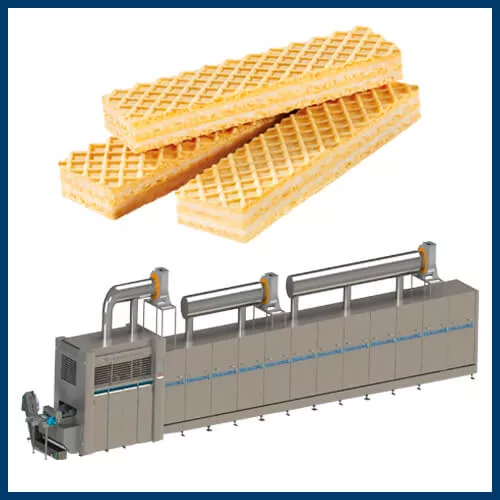
A tunnel oven is a continuous belt that takes seeds, nuts, or cereal flakes through several thermal zones — pre-drying, main roast, ripening, and cooling — under controlled airflow. The product never sits in one place: instead of fighting hot spots in a batch roaster, the operator tunes the curve along the belt and the same recipe runs identically shift after shift.
The variables that actually matter are belt speed, zone temperatures, layer thickness on the belt, and direction of air blowing (up, down, or alternating). Get these right and a roasted seed gets a 6→12 month shelf life with stable colour and aroma; get them wrong and the surface burns before the core dries, oils oxidize, and rancidity shows up two months into storage. Recipe memory in the PLC (we configure up to 200 recipes) is what makes a multi-SKU plant practical.
Two mistakes are common when buying a tunnel oven. The first is sizing on a peak number from a sales sheet instead of the realistic kg/h at your moisture and bulk density — once the layer thickness compensates for the rated belt width, real throughput often drops 20–30%. The second is ignoring exhaust and dust extraction: nut and seed lines generate fines that ignite if they accumulate in the duct. A correct line specifies extraction and cleaning hatches together with the oven itself.
Our practical recommendation is to run a recipe profiling on your real raw material before locking the spec: moisture, oil content, and bulk density determine zone lengths and burner sizing. From there we choose fuel (natural gas, LPG, diesel, electric, or hybrid) on the basis of your site infrastructure, not the marketing default. Automatic loading, unloading, and belt cleaning then bring the line down to 1–2 operators per shift.
Technological advantages
Production equipment