Guide
Equipment covered in this guide
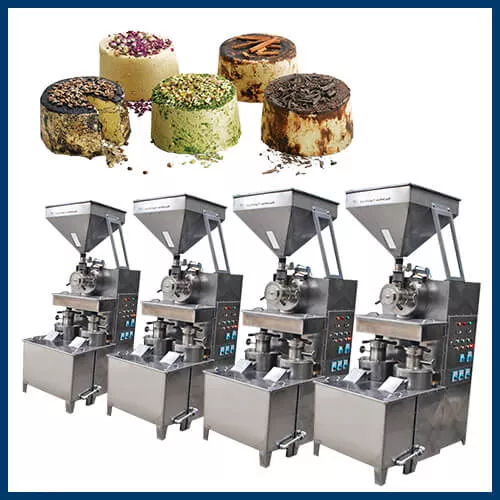
Sesame (or sunflower) halva is a textbook example of a product where the processing method matters more than the ingredient quality. Roasted sesame seeds are ground into tahini, then folded with cooked sugar–glucose syrup at a precise temperature; the resulting mass is gently kneaded so the visible fibre layers form, cooled, and cut. Aggressive mixing destroys the fibre structure and you end up with a uniform paste — close to a candy bar centre, not halva.
The variables that matter are tahini fineness, syrup cooking temperature and Brix, kneading speed (low shear), mass temperature at forming, and cooling rate. A practical metric: density and density-creep over storage. A halva that loses 5% volume in the pack within two weeks was almost certainly mixed too hot or too long. Cooling matters too — pull the product through a controlled tunnel rather than letting it set in ambient air, otherwise the fibre relaxes and slumps in the box.
Two buyer mistakes: choosing a high-shear mixer because it looks more industrial — it is, but it is the wrong tool for halva; and skipping tahini preparation upstream of the line, then complaining that bought-in tahini varies batch-to-batch. A complete halva plant usually includes a roasting and grinding section so the tahini specification stays under your control.
Our approach: gentle low-shear kneading, syrup cooker engineered for the recipe, controlled cooling to lock fibre geometry, AISI food-grade construction throughout. Capacity is sized on real recipe output, not on the kneader's empty volume. The line can be expanded with tahini preparation, packaging, and chocolate-coating modules so the same site covers plain, nut, and coated halva SKUs.
Guide